Roof Replacement Cost in 2026: Pricing by Material and Region
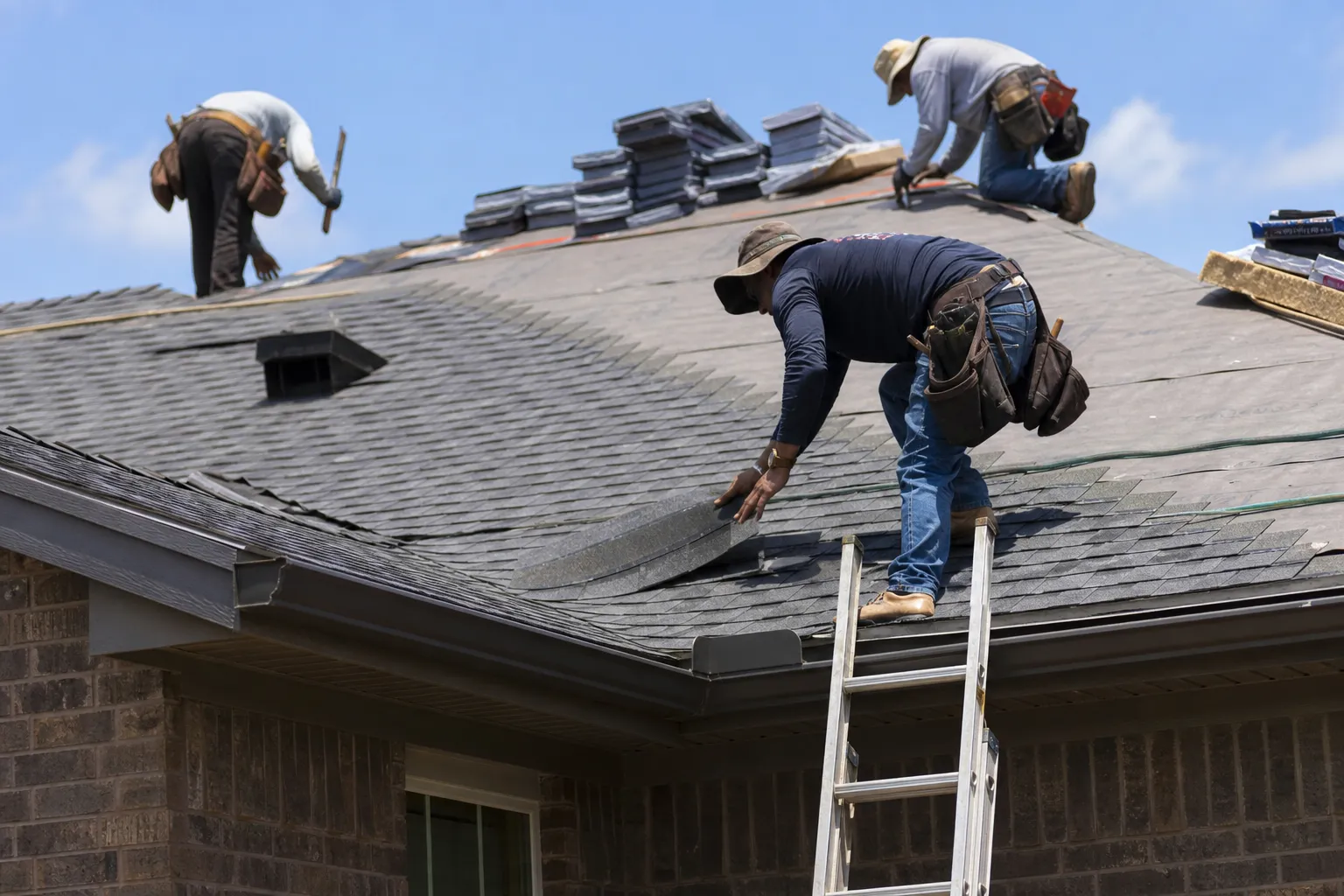
Replacing an asphalt shingle roof on a typical US home costs $7,000 to $18,000 in 2026, with a national average around $11,500. That assumes the most common job in America: a 2,000-square-foot house whose roof surface measures about 2,200 square feet — 22 “squares” in roofing terms, where one square equals 100 square feet of roof area.
Roofers price per square, so that’s the number to anchor on. Architectural asphalt shingles — the standard product on most homes — run $450 to $700 per square installed in 2026, including tear-off of one existing layer, underlayment, flashing, and disposal.
Cost by roofing material
For that same 22-square roof:
| Material | Installed cost per square | 22-square project total | Expected lifespan |
|---|---|---|---|
| 3-tab asphalt | $350 – $500 | $7,700 – $11,000 | 15 – 20 years |
| Architectural asphalt | $450 – $700 | $9,900 – $15,400 | 22 – 30 years |
| Exposed-fastener metal (ribbed panel) | $650 – $1,000 | $14,300 – $22,000 | 30 – 45 years |
| Wood shake | $800 – $1,400 | $17,600 – $30,800 | 25 – 35 years |
| Standing-seam metal | $1,200 – $1,800 | $26,400 – $39,600 | 40 – 70 years |
| Concrete/clay tile | $900 – $2,000 | $19,800 – $44,000 | 50 – 100 years |
| Natural slate | $1,500 – $3,000+ | $33,000 – $66,000+ | 75 – 150 years |
A few notes on reading that table honestly:
- 3-tab is nearly obsolete. The installed savings versus architectural shingles is modest (labor is the same), while lifespan and wind ratings are meaningfully worse. Most quality-focused roofers no longer recommend it.
- Metal’s premium buys longevity, not just looks — we run the full 50-year ownership comparison in metal roof vs. shingles.
- Tile and slate require structural verification. They weigh 2–4x what asphalt does; older framing may need reinforcement ($1,000 – $10,000), which quotes must address.
Regional pricing
Labor rates, code requirements, and storm exposure move roofing prices substantially by region. Architectural asphalt, installed per square:
| Region | Per square | 22-square total | What drives it |
|---|---|---|---|
| Southeast | $400 – $600 | $8,800 – $13,200 | Competitive labor; high volume |
| Texas / South Central | $400 – $625 | $8,800 – $13,750 | Hail-driven volume keeps market competitive |
| Midwest | $425 – $650 | $9,350 – $14,300 | Moderate labor; ice/water shield in code |
| Mountain West | $450 – $700 | $9,900 – $15,400 | Snow-load details; dispersed labor |
| Northeast | $500 – $750 | $11,000 – $16,500 | High labor; ice-dam protection required |
| Florida | $500 – $800 | $11,000 – $17,600 | Wind-uplift code (sealed deck, ring-shank nails), permit/inspection overhead |
| West Coast | $525 – $800 | $11,550 – $17,600 | Highest labor; Title 24/cool-roof rules in CA |
What moves your individual quote
- Pitch and complexity. Steep roofs (over 7:12 pitch) and cut-up designs with valleys, dormers, and hips add 15–40% versus a simple walkable gable. Complexity, not house size, explains most “why is my neighbor’s quote lower” mysteries.
- Tear-off layers. Prices assume one layer. A second existing layer adds $75 – $150 per square in labor and disposal.
- Decking condition. Rotten sheathing is replaced at $70 – $150 per sheet, discovered only after tear-off. A fair contract states the per-sheet price up front; budget 3–5 sheets on an older roof.
- Code items. Drip edge, ice-and-water shield in cold climates, and upgraded ventilation are code-required in most jurisdictions now. A quote that’s $2,000 lighter because it omits them isn’t cheaper — it’s incomplete.
- Steep-slope accessories. Skylights ($300 – $800 each to reflash; more to replace), chimneys, and satellite removals each add line items.
Timing and how to buy well
Roofing demand spikes after storm seasons and in late fall; scheduling in a roofer’s shoulder season (late winter/early spring in much of the country) sometimes earns 5–10% better pricing. More importantly:
- Get three itemized bids specifying shingle line, underlayment type, ice/water coverage, ventilation plan, decking price per sheet, and warranty terms — both manufacturer and workmanship.
- Check licensing and insurance — roofing has the industry’s highest rate of fly-by-night operators, especially post-storm. Our contractor vetting guide covers verification, and if hail is involved, read our insurance claims guide before signing anything a door-knocker hands you.
- Confirm you actually need replacement. A 12-year-old roof with one leaking valley needs a repair, not a tear-off — our repair vs. replace framework walks the decision.
What about insurance and resale?
If wind or hail caused the damage, your homeowner’s policy — not your savings — may fund the roof, subject to your deductible (increasingly 1–2% of dwelling coverage rather than a flat amount). On resale: a new architectural asphalt roof recoups roughly 55–65% of its cost at sale, but an old roof does worse than the math suggests — it triggers inspection objections, insurance-eligibility problems (some carriers won’t write policies on 15+-year-old roofs in storm states), and buyer credits larger than the roof’s actual cost.
FAQs
How much does a new roof cost in 2026? $7,000 – $18,000 for architectural asphalt on a typical home, averaging about $11,500 nationally. Metal runs 2–3x asphalt; tile and slate more still.
How do I estimate my roof’s size? Multiply your home’s footprint (not total living area — ignore upper floors) by 1.1 to 1.4 depending on pitch and overhangs, then divide by 100 for squares. A 1,600 sq ft footprint at moderate pitch is roughly 20–22 squares.
Can I roof over my existing shingles? Codes generally allow one overlay, and it saves $1,000 – $2,000 in tear-off. Most roofers advise against it: it hides deck problems, runs hotter (shortening shingle life), voids some warranties, and costs more at the next replacement. Worth it rarely.
How long does a roof replacement take? One to three days for asphalt on a typical home with a full crew. Metal, tile, and complex roofs run several days to two weeks.
Is a more expensive shingle worth it? Within asphalt, moving from builder-grade to a mid-line architectural shingle is worth the modest premium for wind rating and warranty. “Designer” asphalt lines at $800+/square rarely beat entry metal on value — compare across materials at that price.