Metal Roof vs. Shingles: The 50-Year Cost of Ownership
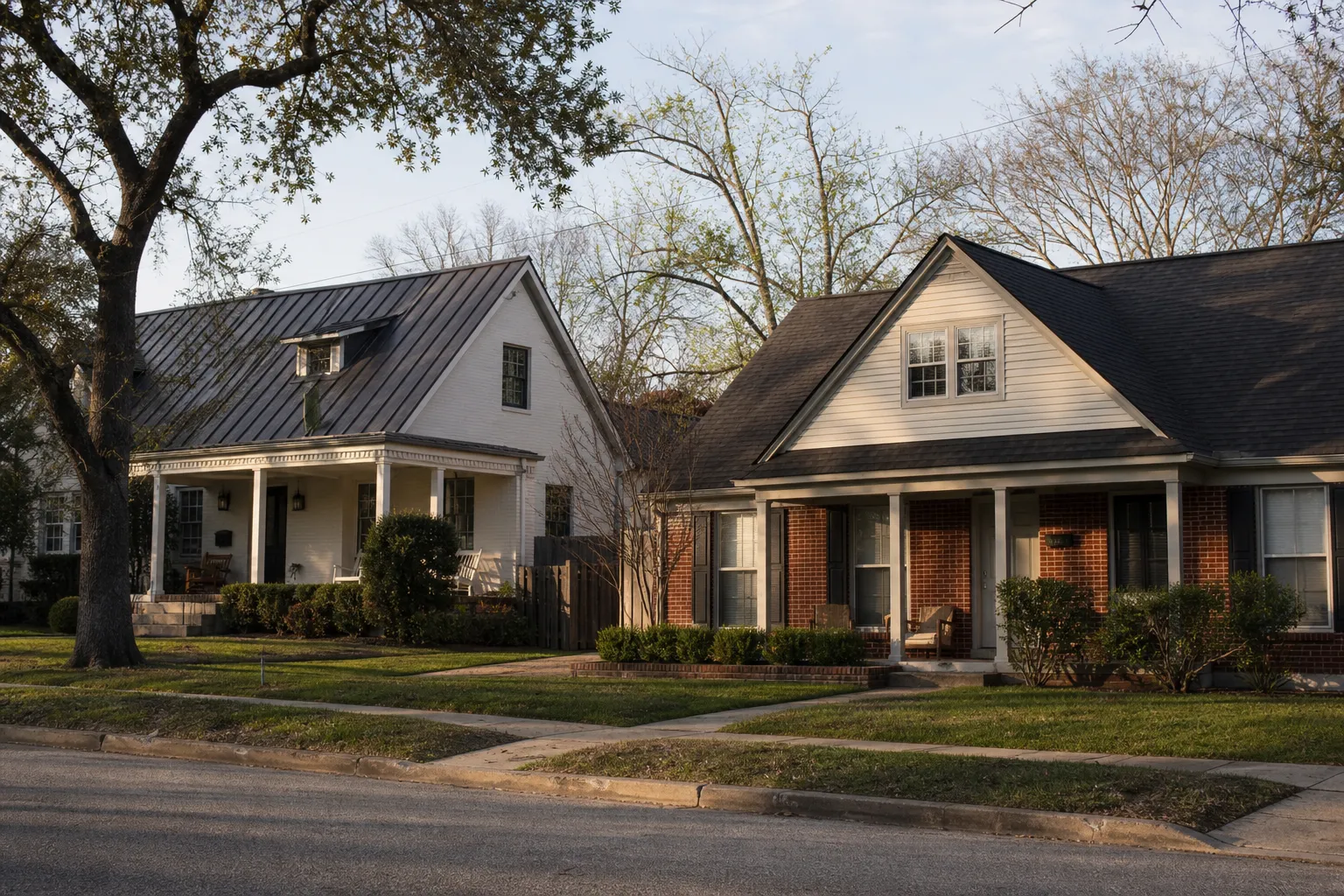
The sticker comparison is stark: on a typical 22-square roof, architectural asphalt shingles run $9,900 – $15,400 installed in 2026, while standing-seam metal runs $26,400 – $39,600 — roughly 2.5x more. Metal roofing marketers respond with “but it lasts forever,” which is directionally true and numerically vague. So let’s do the actual math, including the version of metal roofing the marketers don’t lead with.
First, which metal roof?
“Metal roof” covers two quite different products:
- Exposed-fastener panels (ribbed/corrugated, screwed through the face): $650 – $1,000 per square installed. The affordable metal option — but the rubber washers under thousands of screws are a known maintenance item, typically needing inspection/replacement around years 15–25. Lifespan 30–45 years.
- Standing-seam (concealed clips, panels lock together): $1,200 – $1,800 per square installed. No exposed penetrations, allows thermal movement, 40–70 year lifespan. This is the product the longevity claims are actually about.
The comparison below uses standing-seam versus architectural asphalt, with exposed-fastener noted where it changes conclusions.
Head-to-head
| Factor | Architectural asphalt | Standing-seam metal |
|---|---|---|
| Installed cost, 22 squares (2026) | $9,900 – $15,400 | $26,400 – $39,600 |
| Lifespan | 22 – 30 years | 40 – 70 years |
| Maintenance | Minor; occasional shingle/boot repairs | Minimal; fastener/sealant checks at details |
| Wind rating | 110 – 130 mph (quality lines) | 140+ mph typical |
| Hail | Vulnerable; granule loss and bruising | Dents (often cosmetic) but rarely punctures — note insurance cosmetic-damage exclusions |
| Fire | Class A with most assemblies | Class A |
| Energy | Standard; cool-color options exist | Reflective coatings cut summer cooling load ~10 – 25% in hot climates |
| Insurance | Baseline | Discounts of 5 – 35% in some storm states |
| Resale | Neutral (expected) | Modest premium; strong in metal-normalized markets |
| Noise | Baseline | Comparable over solid decking — the rain-noise fear is mostly a barn-roof myth |
The 50-year cost of ownership
Assumptions: 22-square roof, 2026 dollars throughout (no inflation applied — it would favor metal further, since asphalt’s repeat purchases happen at future prices), mid-range installed pricing, typical maintenance, and a hot-summer climate where metal’s reflectivity saves ~$100/year in cooling. Asphalt at 25-year actual life means two full replacements inside 50 years.
| Cost over 50 years | Architectural asphalt | Standing-seam metal |
|---|---|---|
| Initial installation | $12,500 | $32,000 |
| Replacement(s) | $25,000 (years ~25 and ~50) | $0 |
| Repairs/maintenance | ~$3,000 | ~$1,500 |
| Cooling savings | $0 | –$5,000 |
| Insurance discount (assume modest $50/yr) | $0 | –$2,500 |
| 50-year total | ~$40,500 | ~$26,000 |
On a 50-year horizon, standing-seam wins by a wide margin — roughly $14,000 in this scenario, more in hail country or where insurance discounts run larger.
But almost nobody owns a house for 50 years. Rerun it at realistic horizons:
| Horizon | Asphalt total | Metal total | Winner |
|---|---|---|---|
| 10 years | ~$13,000 | ~$31,000* | Asphalt, decisively |
| 20 years | ~$13,500 | ~$30,000* | Asphalt, unless resale premium is large |
| 30 years | ~$27,000 (second roof bought) | ~$29,000* | Near-even |
| 50 years | ~$40,500 | ~$26,000 | Metal, decisively |
*Net of cooling/insurance savings accrued to that point; metal’s remaining lifespan at sale has real but uncertain resale value not fully counted here.
The crossover lands around years 25–30 — exactly when asphalt roof #1 dies and you’d otherwise buy roof #2. That’s the honest framing: metal is cheap life-cycle roofing sold at a price most people evaluate on a 7-year ownership horizon.
Exposed-fastener changes the entry math: at $14,300 – $22,000 installed with a 30–45 year life, it beats asphalt’s life-cycle cost at a much lower premium, and is the value play in rural and hail-prone markets — if you accept the fastener-maintenance obligation and a more agricultural look.
Who should actually buy which
Buy asphalt if: you’ll likely sell within ~15 years; your neighborhood’s comps make a $30,000 roof unrecoverable; or your budget is better spent on higher-return projects. A quality architectural shingle is a genuinely good product — see our full roofing cost guide for what a proper asphalt job includes.
Buy standing-seam if: this is a long-term or forever home; you’re in hail/wind country where insurance and durability compound the advantage (check whether your policy excludes cosmetic metal dents before assuming claims parity — our hail claims guide explains the exclusion); or you’re in a hot climate where reflectivity pays annually.
Either way: metal installation is a specialty. An asphalt crew’s first standing-seam job should not be on your house — ask how many seam roofs the crew (not the company) has installed, and apply the rest of our contractor vetting checklist. A poorly detailed metal roof leaks just like a cheap shingle roof, at triple the price. And if your current roof might have life left, run the repair-vs-replace framework before buying anything.
FAQs
Is a metal roof worth the extra cost? If you’ll own the home past the ~25-year mark or live in severe-weather country, usually yes on total cost. For horizons under 15 years, asphalt is almost always the better financial choice.
How much more is a metal roof than shingles in 2026? Standing-seam runs 2 – 3x architectural asphalt installed ($26,000 – $40,000 vs. $10,000 – $15,000 on a typical roof). Exposed-fastener metal narrows the gap to roughly 1.4 – 1.6x.
Are metal roofs loud in rain? Over solid decking with underlayment — how houses (unlike barns) are built — the difference from asphalt is minor. Some owners report slightly more sound in hard rain; few consider it a problem.
Do metal roofs lower insurance premiums? In many storm-exposed states, yes — 5 – 35% off the wind portion with some carriers. Ask specifically, and ask whether the policy adds a cosmetic-damage exclusion for metal, which trades premium savings for reduced hail coverage.
Can you install metal over existing shingles? Often yes, code permitting, over one layer with furring or approved underlayment — saving $1,000 – $2,000 in tear-off. The trade-offs (hidden deck condition, warranty terms) mirror asphalt overlays; most quality installers prefer tear-off.