Hail Damage Roof Insurance Claims: How the Process Actually Works
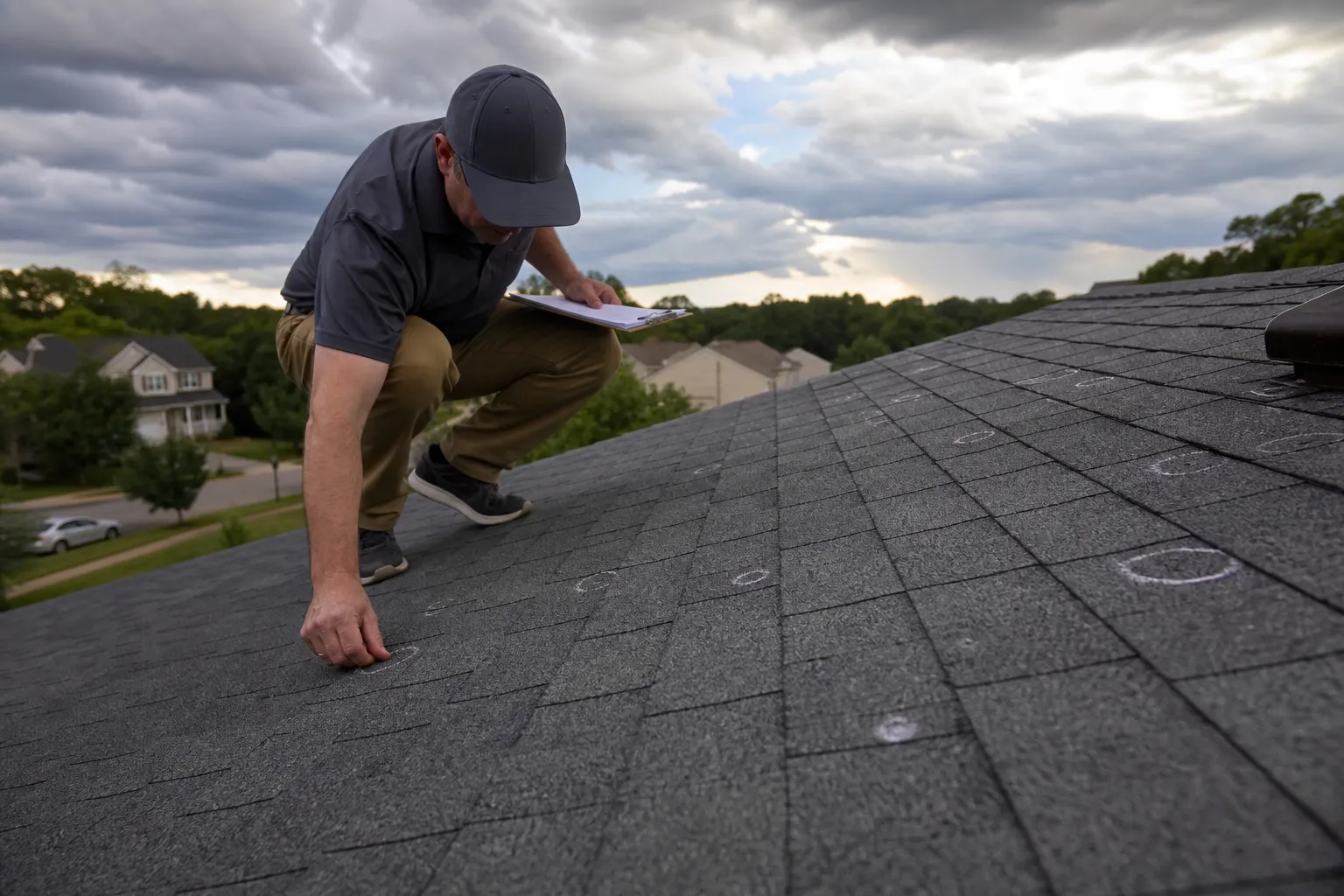
After a serious hailstorm, two things arrive at your door: possible roof damage, and a wave of salespeople who profit from your uncertainty about it. This guide walks through how a hail claim actually works — what adjusters look for, what the policy terms mean in dollars, and where homeowners get hurt. We’re not adjusters and we’re not selling roofs; treat this as the orientation you wish the process came with.
Step 1: Document, then decide — not the reverse
Within days of the storm (and before anyone walks your roof):
- Photograph ground-level evidence with dates: dented gutters, downspouts, window screens, AC fins, mailboxes; shingle granules piled at downspout outlets; hail on the ground next to a tape measure or coin if you can catch it.
- Note the storm date. Claims require a date of loss, and hail history for your address is verifiable — carriers check.
- Don’t rush the claim itself. Most policies allow months (often a year or more) to file. Filing an inspected, documented claim beats filing a panicked one.
A real threshold to know: hail below about 1 inch diameter rarely damages an asphalt roof in decent condition. Quarter-size (1”) is the credible starting point; golf-ball (1.75”) and up almost always does damage.
Step 2: Get an honest damage assessment
This is the step storm-chasers exploit, so the rules matter:
- Prefer a local, established roofer you contacted — one with a physical address in your area, verifiable license/insurance, and local references (our contractor vetting guide applies doubly after storms).
- Be wary of out-of-state plates, door-knocked “free inspections,” and anyone who wants a contract signed before your adjuster’s visit. A “contingency agreement” that assigns them the job if the claim is approved can bind you before you’ve compared price or quality.
- Never let anyone “make sure the adjuster finds damage.” Created damage is insurance fraud, it’s a real phenomenon, and homeowners have been implicated.
Step 3: What the adjuster actually looks for
Adjusters follow a fairly standard methodology — knowing it demystifies the visit:
| What they check | What counts as hail damage |
|---|---|
| Soft metals (vents, flashing, gutters, AC fins) | Fresh dents — these calibrate hail size and direction |
| Test squares (10’x10’ areas per slope) | Industry practice: roughly 8+ hail hits in a test square supports replacing that slope |
| Shingle hits | ”Bruises” — dark spots where granules are crushed away, soft or fractured mat underneath when pressed |
| Distinguishing wear from hail | Blistering, uniform granule loss, foot traffic scuffs, and mechanical damage are not hail — and adjusters are trained on the difference |
| Collateral surfaces | Screens, siding, painted surfaces, decks — corroborating directional evidence |
Random distribution matters: hail strikes scatter; a suspiciously regular pattern suggests something else. You’re allowed — and well advised — to have your roofer present at the adjuster meeting to point out damage and discuss scope on the spot. That’s normal and legitimate; letting the roofer negotiate the claim for you crosses into public-adjuster territory, which is licensed work.
Step 4: Understand what your policy actually pays
Three policy terms determine your check size:
Percentage deductibles. In hail states, wind/hail deductibles are increasingly 1–2% of dwelling coverage, not the flat $1,000 you might assume. On a $400,000 dwelling limit, a 2% deductible means the first $8,000 is yours. On a $11,500 average roof replacement, that changes everything — including whether filing is worth it at all.
RCV vs. ACV. Replacement Cost Value policies pay full replacement (minus deductible), usually in two checks — ACV up front, recoverable depreciation after the work is done and invoiced. Actual Cash Value policies pay replacement cost minus depreciation, period: a 20-year-old roof might be 60–70% depreciated, leaving you a fraction of the cost. Many carriers in hail states have quietly moved roofs to ACV schedules at renewal. Read your declarations page today, not after a storm.
Cosmetic exclusions. Especially on metal roofs, policies may exclude “cosmetic” hail damage — dents that don’t cause leaks. Relevant if you’re weighing metal vs. shingles in hail country.
Also weigh the claim itself: claims history affects premiums and, in some markets, insurability. A borderline claim that nets you $1,500 after an $8,000 deductible may cost more than that in future premiums. For marginal damage, getting a repair quote first — and running it through a repair-vs-replace analysis — is legitimate diligence, not disloyalty to the process.
Step 5: If the claim is approved — or denied
Approved: choose your contractor as if insurance weren’t involved — three bids, references, written scope matching the adjuster’s estimate (discrepancies get negotiated through a documented “supplement” process, which good roofers handle routinely). Deductible payment is legally yours to make; a contractor offering to “eat the deductible” is committing insurance fraud in many states and telling you how they treat paperwork generally.
Denied or lowballed: you can request a re-inspection with a different adjuster, submit your roofer’s documented findings, hire a licensed public adjuster (typically 10–15% of the settlement — worthwhile mainly on large or disputed claims), or invoke the policy’s appraisal clause. Escalate with documentation, not volume.
FAQs
How long do I have to file a hail damage claim? Policies commonly allow one year from the date of loss, sometimes more or less by state and carrier. Check your policy — but inspect and document within weeks, since damage evidence and storm attribution both age poorly.
Will my rates go up if I file a hail claim? Weather claims typically affect premiums less than liability claims, but they’re not free — and multiple claims in a short window can affect renewability. In hail-belt ZIP codes, storm events often raise everyone’s rates regardless of who filed.
What size hail damages a roof? Around 1” (quarter-size) is the credible threshold for asphalt shingle damage; 1.25”+ commonly damages aging roofs; 1.75”+ (golf ball) damages nearly any roof. Wind-driven hail damages at smaller sizes.
Should I sign a contingency agreement with a roofer before the adjuster comes? We’d advise against signing anything that commits the job before you have an approved scope and comparative bids. Having a roofer present at the adjuster inspection, without a binding agreement, gets you the advocacy without the lock-in.
My roof is 18 years old — will insurance still replace it? If covered hail damage is confirmed, yes, but on an ACV schedule an old roof’s payout may be heavily depreciated, and some carriers now require roof replacement as a condition of continued coverage. This is exactly the scenario where reading your declarations page first saves grief.