Roof Repair or Replace? A Decision Framework That Isn't Selling You a Roof
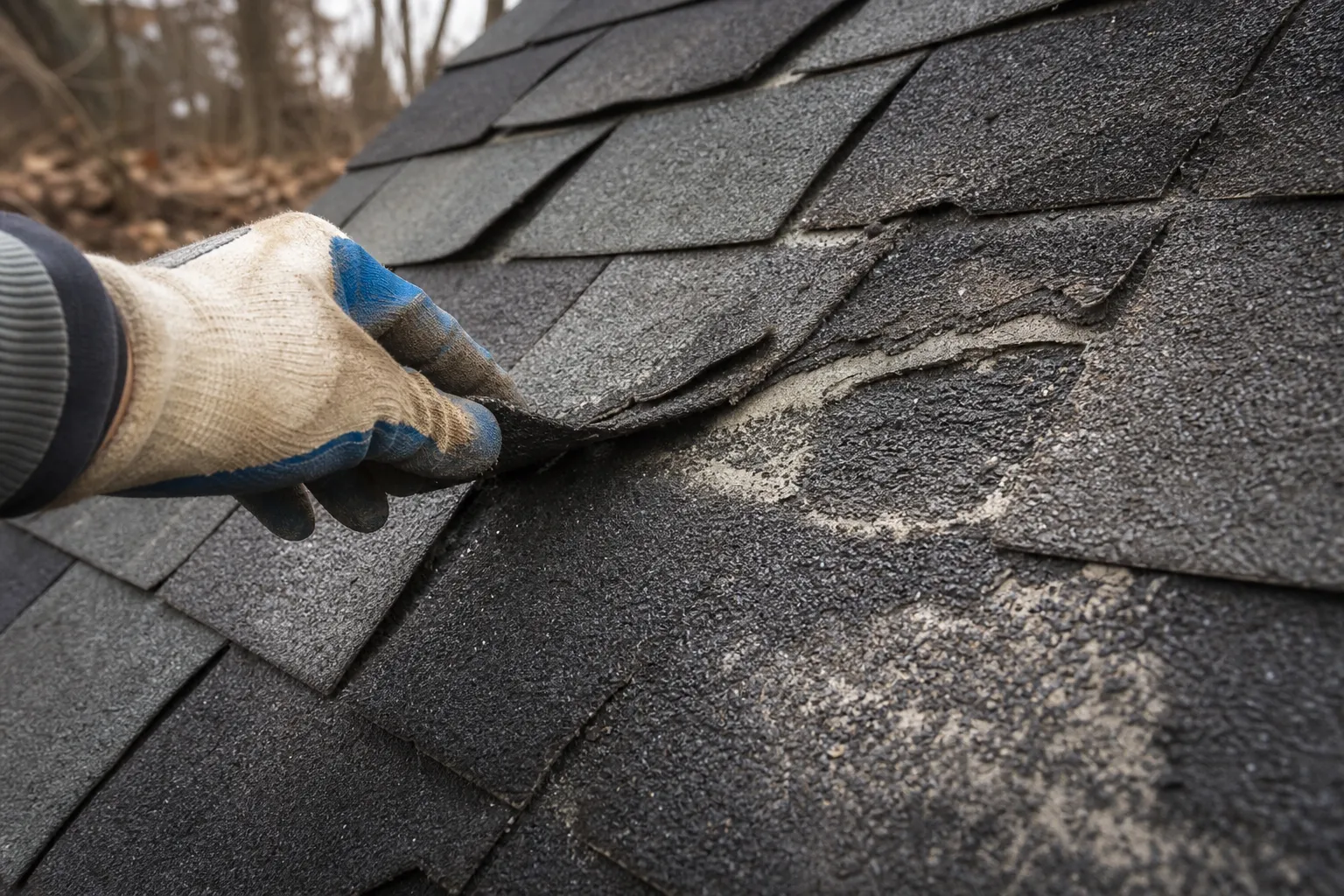
Here’s the conflict of interest baked into this decision: the person diagnosing your roof usually earns 10x more if the answer is “replace.” A repair invoice runs $150 – $3,000; a replacement averages $11,500. So before any sales-driven inspection, it helps to know what the honest decision logic looks like — because there are cases where replacement genuinely is the right call, and cases where a $600 repair buys you eight more good years.
Start with two numbers: age and repair cost
Roof age is the strongest single predictor. Architectural asphalt shingles deliver 22–30 years in moderate climates, less under intense sun (Southwest, Texas) or repeated hail. 3-tab shingles: 15–20 years. Metal, tile, and slate change the math entirely — a 30-year-old standing-seam roof may be mid-life.
The 25% rule is the industry’s honest heuristic: when a repair estimate exceeds roughly 25–30% of replacement cost, and the roof is past the midpoint of its expected life, replacement usually wins. Spending $4,000 repairing a 19-year-old asphalt roof that will need replacement within five years is paying twice.
The age-and-damage matrix
For an architectural asphalt roof (adjust ages down ~20% for 3-tab, harsh sun, or hail country):
| Damage severity | 0 – 10 years old | 10 – 18 years old | 18+ years old |
|---|---|---|---|
| Isolated (a few shingles, one flashing point, small leak) | Repair ($150 – $1,000) | Repair ($150 – $1,000) | Repair if cheap; start budgeting replacement |
| Moderate (one slope or valley failing, recurring leak, widespread granule loss in areas) | Repair — and check warranty/installation quality | Judgment call — apply the 25% rule | Replace |
| Widespread (curling/cracking across slopes, multiple leaks, storm damage across the roof) | Rare — suspect defective product or install; pursue warranty/insurance | Replace | Replace |
Three matrix footnotes that matter:
- A young roof failing broadly is a warranty or workmanship problem, not a purchase decision. Manufacturer defects and bad installation are pursued through the shingle warranty and the installer’s workmanship warranty before you spend a dollar.
- Storm damage moves this to insurance. If hail or wind caused widespread damage, the question isn’t repair-vs-replace out of pocket — it’s a claim, with its own process and pitfalls we cover in the hail damage claims guide.
- “Judgment call” leans on non-roof factors: how long you’ll own the home, whether your insurer is threatening non-renewal over roof age, and whether you’re already planning to sell (an 18-year-old roof becomes a negotiation problem at listing time).
What actually justifies each answer
Repair is the right call when:
- Damage is localized — wind lifted a patch of shingles, a pipe boot cracked, flashing pulled away at a chimney or wall. These cause most residential leaks and cost $150 – $1,000 to fix properly.
- The roof has 8+ expected years left and the deck underneath is sound.
- You need to bridge to a planned replacement (selling in two years; coordinating with other work).
Replacement is the right call when:
- The roof is at or past design life and showing systemic wear: curling, cracking, bald shingles across multiple slopes, granules filling the gutters.
- Leaks are recurring in new places — a sign the whole surface, not one detail, is failing.
- Repair quotes cross the 25–30% threshold.
- Sagging decking or widespread soft spots appear — structural symptoms, not shingle symptoms.
- Your insurer requires it. In storm-exposed states, carriers increasingly decline to renew policies on roofs past ~15–20 years regardless of visible condition. This is now one of the most common real reasons for replacement.
The diagnosis: how to get an honest one
- Never rely on a single free inspection from a company that sells roofs, especially one that knocked on your door. Free inspections are a sales channel; that doesn’t make the findings false, but it makes them unverified.
- Get a second opinion on any replacement recommendation — ideally from a roofer you call, or pay $150 – $400 for an independent inspection from a home inspector or engineer with no dog in the fight. On an $11,500 decision, that’s cheap insurance.
- Ask for photo documentation of every claimed problem, with locations. Legitimate contractors provide it unprompted; our contractor vetting guide lists the other tells.
- Look at the evidence you can see yourself: granules in gutters, shingle pieces in the yard after wind, daylight or water stains in the attic, curling visible from the ground with binoculars. You can’t self-diagnose a roof, but you can sanity-check a diagnosis.
The middle option nobody mentions: partial replacement
Replacing one slope — say, the south-facing slope that sun has cooked while the north slope has years left — costs proportionally less and is legitimate when damage is genuinely confined. The trade-offs: color mismatch with aged shingles, a seam where old meets new, and per-square pricing about 10–20% higher than whole-roof work. It’s most sensible on large roofs where one plane took storm damage, and least sensible on small roofs where mobilization costs dominate anyway.
If you do replace, that same logic applies to material choice — a roof you’ll buy once versus twice more is the core of the metal vs. shingles decision.
FAQs
How much does a typical roof repair cost in 2026? Minor repairs (shingles, pipe boots, small flashing): $150 – $1,000. Moderate repairs (valley rework, chimney reflashing, one slope’s worth of patching): $1,000 – $3,000. Beyond $3,000, apply the 25% rule against replacement cost.
How do I know if my roof needs replacing and not just repair? Systemic symptoms — curling or cracking across multiple slopes, heavy granule loss, recurring leaks in new locations, or age past 20 years for asphalt — point to replacement. Localized symptoms at penetrations and flashings point to repair.
Can I replace just part of my roof? Yes — slope-by-slope replacement is legitimate for confined damage, at a modest per-square premium and with cosmetic mismatch. Most useful on large or storm-damaged roofs.
Will insurance pay to repair or replace my roof? Insurance covers sudden storm damage (wind, hail, falling trees), not wear-out. If a storm caused it, document immediately and understand the claim process before signing with any contractor.
Is it worth repairing a 20-year-old asphalt roof? Only cheaply and briefly — a $300 boot replacement to stop a leak, yes; a $3,000 valley rebuild, no. At 20 years you’re buying time, and the price of time should be low.