How Much Does Window Replacement Cost in 2026?
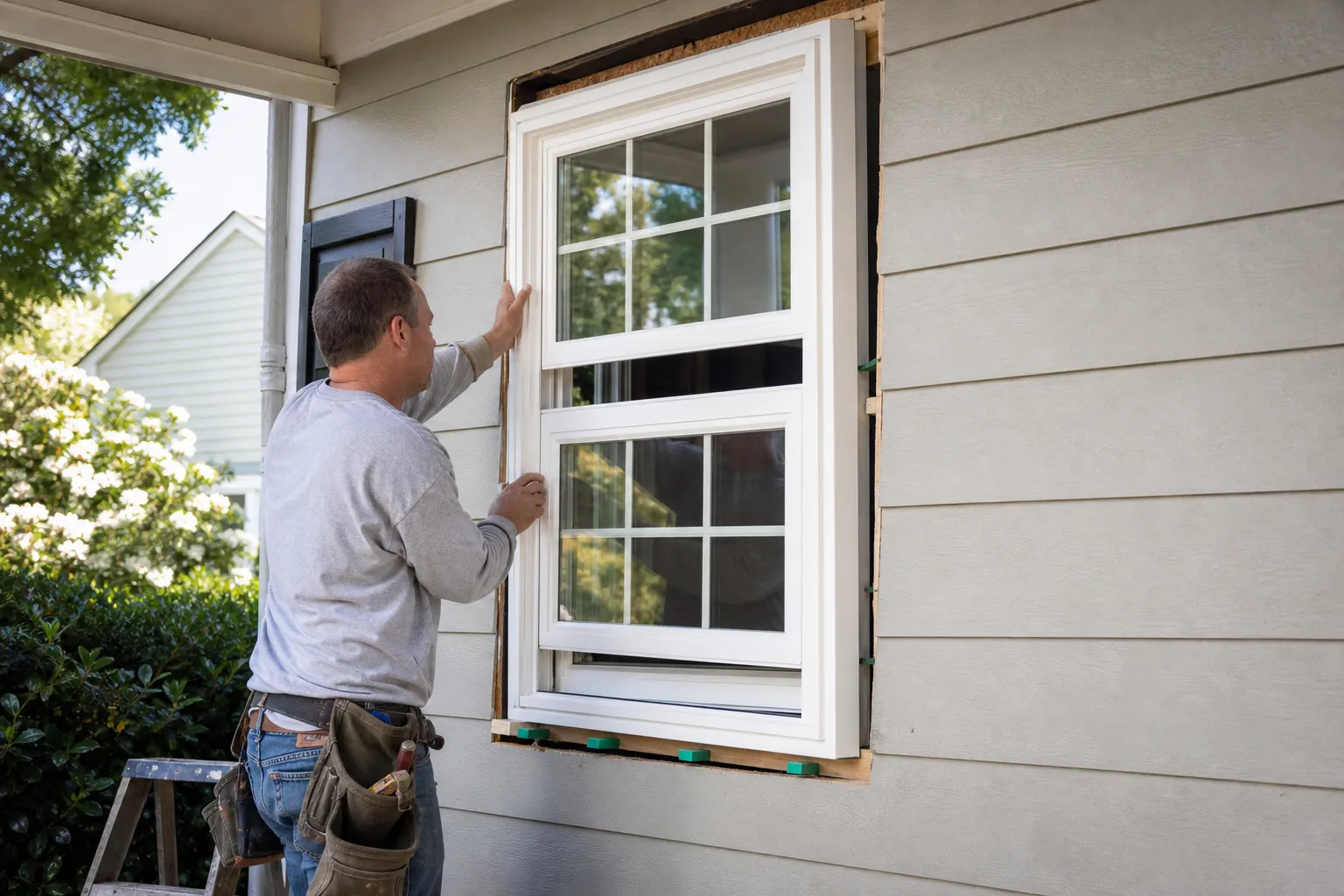
Replacing a window in the United States costs $450 to $1,200 installed in 2026, with a national average of about $750 per window. A whole-house project — ten windows on a typical single-story home — usually lands between $4,500 and $12,000. Those figures assume mid-grade double-pane vinyl or fiberglass units installed as “inserts” into existing frames; premium materials, full-frame installation, or specialty shapes can push individual windows past $2,000.
The spread is wide because a window quote is really three prices bundled together: the unit itself (roughly 60–70% of the total), labor ($150–$300 per opening for a standard insert), and job-level costs like disposal, trim work, and — in some cities — permits. Understanding each piece is the best defense against overpaying.
Cost by frame material
Frame material is the single biggest price lever, and it also determines how long the window lasts.
| Frame material | Installed cost per window | Typical lifespan |
|---|---|---|
| Aluminum | $400 – $900 | 20 – 30 years |
| Vinyl | $450 – $750 | 20 – 30 years |
| Fiberglass | $700 – $1,300 | 40 – 50 years |
| Composite | $800 – $1,500 | 35 – 50 years |
| Wood | $900 – $1,800 | 30+ years (with upkeep) |
| Clad wood (aluminum/fiberglass exterior) | $1,000 – $2,000 | 30 – 50 years |
Vinyl dominates the replacement market because it hits the lowest installed price while still delivering decent insulation. Fiberglass costs roughly 40–60% more up front but expands and contracts at nearly the same rate as glass, so seals tend to last longer — a real durability argument, which we break down in our vinyl vs. fiberglass comparison. Wood remains the choice for historic homes and strict HOAs, but it carries both the highest price and the highest maintenance burden.
Cost by window style
Style matters almost as much as material. Operating hardware, size, and structural work drive the differences.
| Window style | Installed cost (vinyl, mid-grade) |
|---|---|
| Double-hung | $450 – $900 |
| Single-hung | $400 – $800 |
| Sliding | $500 – $1,000 |
| Casement | $600 – $1,100 |
| Picture (fixed) | $500 – $1,300 |
| Awning | $550 – $1,100 |
| Bay or bow | $2,500 – $6,500 |
| Basement egress (with well excavation) | $2,500 – $5,500 |
Bay, bow, and egress windows are outliers because they involve structural framing or excavation, not just a swap. If your project includes one, expect it to account for a disproportionate share of the total.
Insert vs. full-frame replacement
This distinction changes your quote by 15–30% and contractors don’t always explain it:
- Insert (pocket) replacement keeps your existing frame and trim; the new unit slides into the old opening. It’s cheaper and faster, but you lose a little glass area and it only works if the existing frame is square and rot-free.
- Full-frame replacement removes everything down to the rough opening, including exterior trim. Add $150–$400 per window. It’s mandatory when frames are rotted, out of square, or leaking, and it’s the only way to inspect and re-flash the opening properly.
If a contractor quotes full-frame across the board without checking your frames, ask why. Conversely, if every window is quoted as an insert on a 1970s house with visible rot, that’s a corner being cut.
Other factors that move the price
- Glass package. Upgrading from standard double-pane to low-E argon-filled glass adds $75–$150 per window; triple-pane adds $150–$400. Our energy-efficient windows guide covers when those upgrades actually pay off — and the important 2026 change to the federal tax credit.
- Floor level and access. Second-story and above typically adds $50–$150 per window for ladder or scaffold work.
- Region. Labor in the Northeast and coastal California runs 10–20% above the national average; much of the South and Midwest runs 5–15% below. State building codes matter too — Florida’s impact-glazing requirements roughly double per-window costs in coastal zones (see our Florida window cost guide), while Texas pricing sits slightly under the national average (details in our Texas deep-dive).
- Volume. Installers price per-window rates lower on 8+ window jobs because setup and travel are amortized. Replacing one window at a time is the most expensive way to do a whole house.
Sample whole-house budgets
| Project | Realistic 2026 budget |
|---|---|
| 8 vinyl inserts, single-story ranch | $4,000 – $6,500 |
| 12 vinyl inserts, two-story colonial | $6,500 – $10,500 |
| 12 fiberglass, full-frame, two-story | $12,000 – $19,000 |
| 15 clad-wood, full-frame, historic home | $18,000 – $32,000 |
How to keep costs down without regretting it
- Get three itemized quotes. Per-window pricing from national “one brand” sales operations often runs 30–50% above comparable local installers. Insist on line items, not a single project number.
- Skip the highest-pressure pitch. “Today-only” discounts of 40% signal an inflated anchor price, not a deal. Our contractor vetting guide lists the red flags.
- Match the glass to your climate. Paying for triple-pane in Georgia or high solar-gain glass in Arizona wastes money. ENERGY STAR climate-zone criteria are the shortcut.
- Replace in batches. If you can’t do the whole house, do a full side or floor at a time rather than single windows.
FAQs
Is $750 per window a fair price in 2026? For a mid-grade vinyl double-hung installed as an insert, yes — that’s right at the national average. For the same window you might pay $550 from a solid local installer or $1,100 from a heavily-marketed national brand. Material, install type, and who’s quoting all matter more than the calendar year.
How many windows should I replace at once? Whole-house or whole-side batches get the best per-window pricing. Most installers apply meaningfully better rates at 8+ windows.
Do replacement windows increase home value? Remodeling-industry resale data consistently shows vinyl window replacement recouping roughly 65–70% of its cost at sale. It’s a comfort and efficiency purchase first, a value play second.
How long does installation take? A two-person crew typically installs 8–12 insert windows in one day. Full-frame replacements run 3–5 windows per day.
Can I replace windows myself? A skilled DIYer can handle an insert replacement and save the ~$200 labor. Full-frame work involves flashing, waterproofing, and sometimes structural headers — errors there cause rot you won’t see for years. Most homeowners should hire it out.