Bathroom Remodel Cost in 2026: What Each Scope Tier Really Buys
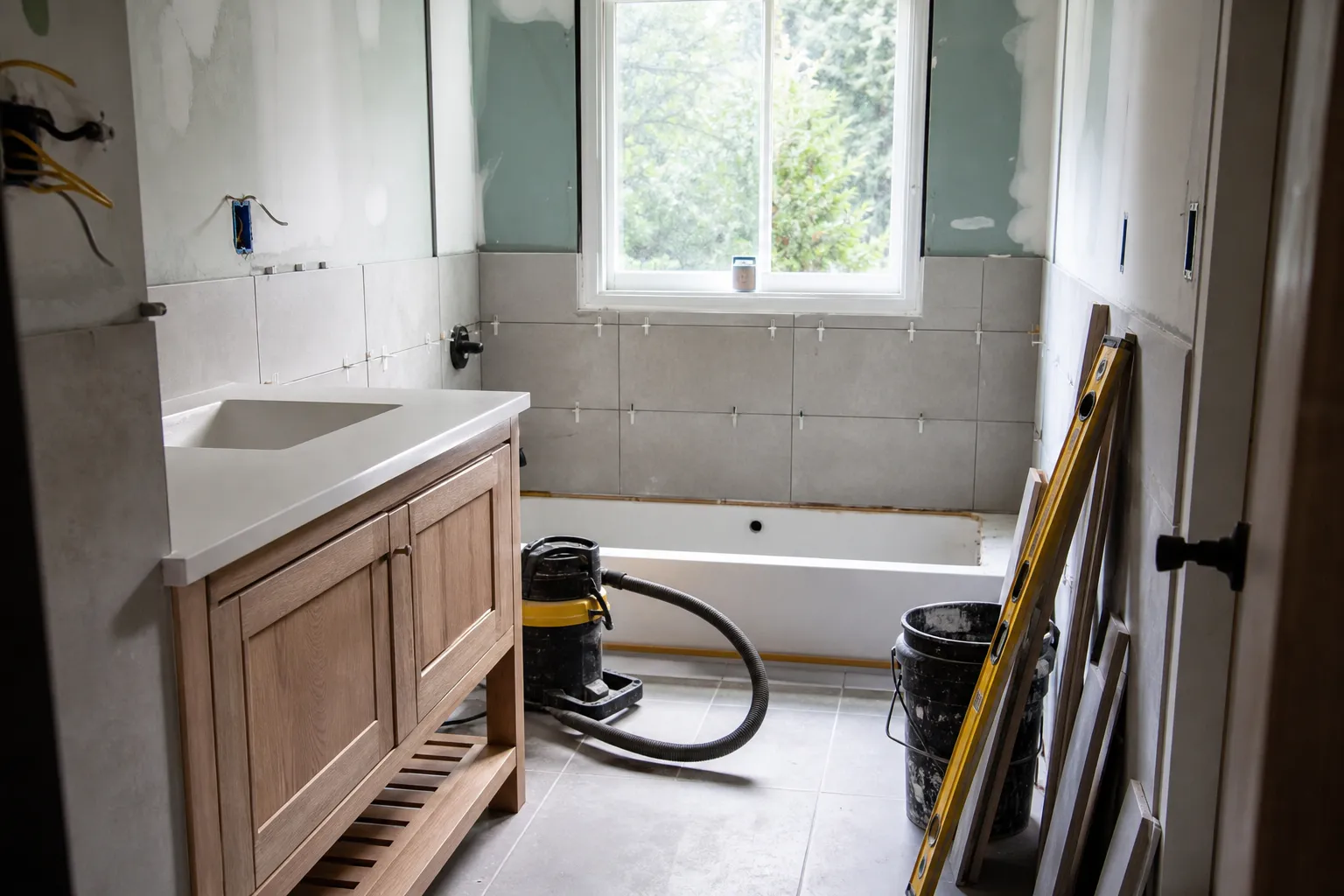
A bathroom remodel costs $6,000 to over $100,000 in 2026 — a range so wide it’s useless without scope attached. Priced by what’s actually being done, the picture sharpens: a cosmetic refresh runs $6,000 – $15,000, a full gut-and-replace of a standard 5x8 bathroom runs $18,000 – $35,000 (the national mid-range average sits around $28,000), and an upscale primary-suite renovation runs $50,000 – $100,000+. On a per-square-foot basis, expect $200 – $600 depending on finish level and how much moves.
The single most important cost rule in bathroom remodeling: keeping fixtures in their existing locations is cheap; moving them is expensive. Everything else is detail.
Cost by scope tier
| Tier | What’s included | 2026 cost (5x8 – 6x10 bath) |
|---|---|---|
| Cosmetic refresh | Paint, vanity, faucet, toilet, lighting, mirror, hardware; tub/tile stay | $6,000 – $15,000 |
| Mid-range full remodel | Gut to studs, same layout; new tub or shower, tile, vanity, toilet, lighting, vent fan | $18,000 – $35,000 |
| Upscale / layout change | Fixtures relocated, walls moved, custom tile shower, double vanity, heated floor, premium fixtures | $50,000 – $100,000+ |
Two clarifications the tier table hides:
- Powder rooms (half baths) cost less across the board: $4,000 – $12,000 for a full redo, since there’s no wet zone.
- Primary bathrooms cost more per square foot than hall baths at the same finish level, because they contain more fixtures (double vanity, separate shower and tub) and buyers expect higher finishes there.
Where the money goes: mid-range gut remodel
Line items for a $28,000, 5x8 full remodel, same layout:
| Line item | Typical share | Dollar range |
|---|---|---|
| Labor (all trades) | 40 – 50% | $11,000 – $14,000 |
| Tile and setting materials | 10 – 15% | $2,800 – $4,200 |
| Shower/tub and glass | 10 – 15% | $2,800 – $4,200 |
| Vanity, top, and sink | 8 – 12% | $2,200 – $3,400 |
| Plumbing fixtures (toilet, valve, faucets) | 6 – 10% | $1,700 – $2,800 |
| Electrical, lighting, vent fan | 5 – 8% | $1,400 – $2,200 |
| Permits, dumpster, misc. | 4 – 6% | $1,100 – $1,700 |
Notice labor is nearly half. That’s why finish upgrades (“nicer tile”) move budgets less than people expect, while scope changes (“move the toilet to that wall”) move them more: relocating a toilet drain runs $1,500 – $3,500 by itself, more on a slab.
The five budget-breakers
- Hidden water damage. Behind tubs and under toilets in homes 25+ years old, rot and mold show up in a large minority of gut remodels. Carry a 10–15% contingency; you’ll use it more often than not.
- Layout changes. Every fixture that moves drags plumbing, and often framing and electrical, with it.
- Custom tile showers. Gorgeous, but a site-built pan, waterproofing, and tile labor make the shower the most expensive zone in the room — a tub-to-shower conversion alone averages $9,500. Grout-free panel systems save $2,000 – $4,000 per shower.
- Special-order everything. A backordered vanity can idle a plumber for two weeks. Order all materials before demo starts; good contractors insist on it.
- Scope creep mid-project. “While the wall is open” decisions are made at maximum leverage for the contractor and zero comparative pricing for you. Decide the scope before demo.
Is it worth it at resale?
Remodeling-industry cost-vs-value data has been consistent for years: a mid-range bathroom remodel recoups roughly 65–75% of its cost at sale; upscale remodels recoup less, typically 45–60%. In plain terms: remodel for your own use and comfort, with resale as partial recovery — not as an investment thesis. The exception is genuinely dated or damaged bathrooms in otherwise-updated homes, where a mid-range remodel can remove a sale-killing objection.
How people actually pay for it
At $28,000, most homeowners aren’t writing a check. The financing choice changes the true cost of the project by thousands of dollars — a HELOC at ~8% versus dealer financing with a deferred-interest trap are very different products. We break down every option honestly, including when contractor financing is fine, in our bath remodel financing guide.
Getting quotes that mean something
- Get three itemized bids on an identical written scope. A single-number bid (“bathroom remodel: $31,500”) cannot be compared or negotiated.
- Expect and welcome a gap between bids of 15–25%; gaps of 50%+ mean the scopes aren’t actually identical — or someone plans to make it up in change orders.
- Verify license (where your state licenses remodelers), insurance certificates, and lien history before signing anything. The full checklist is in our contractor selection guide.
- Payment schedule should track completed work: 10% or $1,000-style deposits (some states cap deposits by law), progress payments at milestones, meaningful final payment held until punch-list completion.
FAQs
What does a bathroom remodel cost in 2026? Cosmetic: $6,000 – $15,000. Full mid-range gut of a standard bath: $18,000 – $35,000 (about $28,000 average). Upscale primary suite with layout changes: $50,000+.
How long does a bathroom remodel take? A mid-range gut remodel takes 3–5 weeks of work time once materials are on site — but 2–3 months door-to-door including design, ordering, and permits. Be suspicious of promises under two weeks for gut scopes.
What’s the most expensive part of a bathroom remodel? Labor overall (40–50% of budget), and the shower specifically among zones. Custom tile showers with frameless glass routinely exceed $10,000 as a line item.
Can I remodel a bathroom for $10,000 in 2026? Yes, as a cosmetic refresh: new vanity, toilet, lighting, paint, and hardware while keeping the tub, tile, and layout. A full gut for $10,000 requires substantial DIY labor.
Do I need a permit to remodel a bathroom? For gut remodels involving plumbing or electrical changes, yes, in nearly all jurisdictions ($150 – $600 typical). Cosmetic swaps generally don’t require one.